Tuesday, September 10, 2013

The Deserted Island

The Deserted Island
September, 2013


Walking through the streets of Isla de Mozambique feels like walking through a museum that hasn’t been curated or cared for in years. The houses look like they should be beginning to crumble yet they stand defiant, proud and strong in the face of years of neglect. Hugging the island are beaches, graced by white sand, unspoiled and ungroomed, and blue water, warmed by the sun. Connecting one end, where you can find the grandiose abandoned houses of the Portuguese, to the other, where most of the Mozambicans live in shacks with tin roofs, are dirt roads flanked by concrete sidewalks, varying in quality and the number of potholes. There are a few modern fixtures, including a nightclub and a cell phone store, but most of the island seems to be from a different era.

Isla de Mozambique was originally an island held a Bantu tribe. In 900 AD it was occupied first by Arabs, looking to set up trading posts and then by Portuguese, for whom it was a key trading post en route to India. Following a prosperous period marked by economic expansion and architectural development, including the building of mighty fortresses that remain today, Isla fell into decline in the 17th century. But as the demand for slaves across the world grew in the second half of the 18th century, so did Isla’s economy. When the capital of Mozambique, a colony at the time, was shifted to Maputo (where it remains today) the economy again slowed down. But what truly brought Isla down to its knees was the sudden evacuation of Portuguese, many of whom identified themselves as Mozambican at the time, at the time of independence. In 1975, FRELIMO, in what Wikipedia has coined “an act of vengeance”, ordered all Portuguese to evacuate the country within 24 hours with only 20 kgs (44lbs) of belongings. Houses were locked up and abandoned and many seem to remain untouched from that day.


To me though, Isla de Mozambique was a soft bed at the end of a long journey, a cold drink after a rough day or a refreshing dip in the ocean after toiling in the sun. It was, in a word, paradise. I wake up early, when the sun wasn’t yet too hot, and go sit on the roof of the hostel and read a book with my coffee and cigarettes. The sun kisses my bare arms and legs and my eyes begin to get heavy and the words in my books turn to cloudy drops of ink and eventually and inevitably, I doze off. 


In my sleep, I find myself walking through Isla in its many high points. The houses, splendid in their size and architectural design, tower above me, not like NYC skyscrapers in their steel casings and sharp corners, but more kind and soft. The hustle and bustle of the streets is full of energy and vibrancy. The parks are teeming with children, holding hands, skipping and singing, as kids can only do in dreams. I walk along the carefully manicured streets and under the shadowy protection of trees but the further I get away from the houses, the more the scenery changes. Suddenly, I find myself at the tip of the island where the fortresses are. They seem to be flexing their muscles with their high walls and circling guards but I’m not the threat. They face outwards at the sea, keeping an eye out for intruders. I turn and slowly wander away from the fortresses and the stone houses and the transformation is immediately obvious. No longer is the street teaming with Portuguese dressed in elegant summer clothes bristling with excitement at the debutante ball tomorrow, but instead its crowded with Mozambican men carrying recently caught fish, kids playing with homemade toys and women headed in the opposite direction, on their way to work in the houses of the rich. Where the houses were once stone, they are now straw. It isn’t a depressing scene per se but there is a tangible difference from earlier.


When I eventually rouse myself from sleep, it’s time to explore the depths of the island and to go for a swim in the Indian Ocean. The heat has gotten intense now but the weather is dry and there’s a light breeze. This isn’t the NYC heat that makes your clothes cling to you and your hair stick to your forehead within minutes. Instead it’s a pleasant heat. Granted, it’s the winter here and I can’t imagine how hot it gets in the summer but for now, its bearable and even enjoyable.

The first few days, the streets were usually pretty empty, save for a few kids fooling around and some stray dogs. The dogs were particular fun to watch. They had their block that they guarded so that if you wandered onto it, you would immediately be surrounded by barking dogs. But they kept their distance and never got close enough to feel properly threatening. All bark and no bite.


The best walk was to the old fortresses. I only saw the outside of the fort and didn’t venture inside but there was still enough to see and take in. It seems the fortresses from my daydream have aged quite a bit, albeit very well. Restoration efforts are being undertaken to preserve this UNESCO World Heritage Site and you can begin to see the patchwork on the outer parts. Indeed here more so than anywhere else, the restoration efforts seem to not be disturbing the beauty of the original architecture. In fact, one amazing thing about Isla is that in all of its years of development and decay, the same building techniques, the same materials and the same principles were unwavering stuck to, giving the island a sense of unity through time.


Finally I reach the dock, strip down to my bathing suit, carefully climb down the stairs and dive in.
__________________
For any other information related to this piece, feel free to leave a comment or to contact me via email, via twitter or any other imaginative way you can think of!

If this is your first time here, check out my Introduction to the Blog and Introduction to Africa.

Tuesday, September 3, 2013

Zen and the Art of Public Transport

Zen and the Art of Public Transport
September, 2013

I’m on a bus again. But this time I have two seats to myself, there’s semi-functioning wifi and AC, and the driver is certainly not drunk. How different this experience will be from my last few bus rides! In the past four months, you see, I’ve spent hours on buses. But not luxurious coaches like the MegaBus I’m sitting on right now. They’ve ranged from bicycles to motorcycles to automobiles acting as buses, to minivans to actual full sized (though not fully operational) coaches. I’ve stood for 6 hours on one ride (in the aisle precariously balancing my bag between my legs and clutching the bar above me as hard as my broken thumb can stand), been squeezed into a passenger car with five others in the back seat (we ended up driving through puddles so deep that the tires just spun futilely in place) and sat/sslept (impatiently) for 36 hours in a coach (we drove first for 10 hours with many bathroom and food breaks, then waited for the military convey to resume, in the dead of night in a town on the precipice of disaster before resuming the drive for another 16 hours). Yet I don’t mourn the time spent on these various forms of public transportation, for that is at the end what they all boil down to, but instead value the things that I learned while trapped in these different rolling death traps (which I say because car accidents are the leading cause of expat injury and death in Africa).

You are probably wondering: My, what on earth could you learn from sitting on a bus/car/motorcycle/minivan/bicycle for 1-36 hours with your legs cramped up in the minimal leg room, your neck sore from the bumps/humps/pot holes in the paved/unpaved road and with your stuff safely/unsafely stored in the small area above your head/by your feet/in the weird open trailer in the back/on your back?

There is an art to gainful use of time on public transport and it is tied into ones ability to people watch (while staying upright). I think I gleamed more about the cultures of the different places I visited from the way people interacted with each other and with us than I could have in any other casual way. For example, in Mozambique, I learned from sitting on the bus that the authority is suspicious of tourists. As we were entering the line to wait for the military convey to take us through Mozambique, a soldier came aboard the bus to do a glance over the passengars. Presumably, his job was to check for suspicious people, firearms or other menacing looking things that might cause ire in an area striken by a sudden bout of rebel activity and violence. Instead, he instantly spotted us, sitting looking beleaguered, hungry and tired, and made a be-line for the back where we sat, me curled up into the fetal position with my legs tucked into the crevasse in between the seats and James folded over his Kindle pouring over the Stephen King series that has caught his attention. He asked us, in Portuguese, for our passports in a voice that sounded as beleaguered, hungry and tired as we looked. If you’ve never heard Mozambiquean Portuguese, imagine someone with a strong Russian accent bantering in Spanish. Finding us unable to understand/respond quickly enough, he gruffly indicated to us to show him our papers. He took the documents and leafed through this rapidly, not looking for anything in particular but wanting to make it look like he was. Unlike the police in Nampula, who demanded of us our papers three times in the span of our fifteen minute walk from the bus depot to the hostel, he didn’t turn to our visa to ensure that we were legal. He returned them to us and walked off the bus. There was no rifling through the bags to check for RENAMO paraphernalia or looking into our eyes to detect a rebellious spirit. He just wanted to make the motions, it seemed, of making us feel as unwelcome, a feeling that we found in all the authority figures in Mozambique though in none of its people.

On the bike ride from the Malawian border to Milange, on the Mozambiquean side, I learned that everyone likes to fleece tourists, even when they turn out to be kind and reasonable people. We arrived at the border, coated in bus and grime from the previous ride in a minibus in Malawi, and eager to get through the border security and into a lodge where we could take our first showers post our ride to Mulanje, our hike up (and down) Mt. Mulanje and the trip to the border (a total of four days), only to find that the visa for Mozambique was a whooping hundred USD or 2,175 meticais (a notably lesser sum). We needed to go to the atm in the next town, on the Mozambique side, to withdraw enough cash to buy our way into the next country. The only people offering rides were two friendly looking men on bicycles. In desperation, we didn’t negotiate a price before mounting and beginning the slow cycle into town on the back of the two men’s bikes (we had to leave the thired comrade at the border as insurance). In town we were greeted by a political rally on the right and signs welcoming the president high above. Our judgment clouded by the haze of exhaustion and the desire to finally see the real color of our hair (mine was now a light copper color from the dust), we did not pay heed to the warning that something in our plan was about to go badly wrong. Only later, after we had visited the first guest house to the manager telling us it was full, the second to find the manager indicating that it was fully booked and the third to manager just chuckling at our request, did we realize that we were in trouble. The president’s men had stolen our cleanish beds and showers. Still, our bicycle taxi men followed us, determined to stick with us till we found a place to lay our weary heads and wet our dry mouths (showers were no longer a priority). Ultimately, they suggested an idea so wild, so crazy, so local that it might just work. Our final stop was the chapa (mozambiquean for minibus) depot. Here we bravely walked up to the first chapa and asked if we might sleep in his van for the night and then leave with him in the morning. He agreed to the plan and we bought our tickets and lay down our bags. We paid our taxi men and, after three hours of back and forth and searching, they left us to our own devices. Only later did we learn that we had paid them about ten times what we should have. (We also didn’t end up sleeping in the vans as we were saved by a PeaceCorps angel who found us and gave us a bed for the night!)

In Botswana, I learned getting lost in a combi (Botswanan word for the very same minibuses) could lead to a great night out. We had had every intention of making it the movies for a calm night in. But we were running late so, without checking with the driver thoroughly as to his direction, we hopped into a combi, dutifully paid the three pula per person fee and sat back (and squished in). Only about twenty minutes later did we realize that we were not headed in the right direction anymore. Another ten minutes later, we hoped off, not knowing where we were but not too worried about it either. In the distance we saw the neon glow of a bar sign and headed in that direction, like moths to a flame, to discover a karaoke bar – a successful night.

I learned about the culture of sharing from sitting on the bus and watching food be passed around from the window, where it was purchased, by the lucky window seat owner, to the center, where the purchased stood, followed by the commission free passing of money back to the window and finished off with the sharing of food between the purchased and the others.


But I think that the most prevalent lesson I learned was luxury of personal space. Who needs to be able to stand up straight, sit on your own seat or breath unobstructed anyway?
__________________
For any other information related to this piece, feel free to leave a comment or to contact me via email, via twitter or any other imaginative way you can think of!

If this is your first time here, check out my Introduction to the Blog and Introduction to Africa.

Wednesday, July 31, 2013

A Fairer World


A Fairer World
Dushambe, Tajikistan; 2003

The boys were running around outside playing. I could hear them squealing and giggling as they chased each other around the yard. The yard wasn’t very big but for a ten and nine year old it sufficed to keep them occupied in their games. I could hear their bare feet clapping the concrete floor when they came inside for a glass of water. I heard the refrigerator open and the rattling of glasses, the opening of the water bottles and the sloshing of water as it spilled. And then the squealing and giggling resumed outside. It went on for a few more minutes before there was a sharp cry and then tears. I dropped my sponge into the bucket and ran outside with the other girl to find my brother looking anxiously on as the other boy’s knee slowly trickled blood onto our yard. I took charge and poured cold water on his knee and sloppily applied a band-aid on it before the boys returned to their games and I to the chores with the girl.

I had personal chores at my father’s house in New York and my mother’s in Dushambe, such as picking up my clothes and cleaning my room but, at the tender age of 12, I had never before scrubbed a floor on my knees nor washed the windows and tables. But here I was, with a girl who was meant to be a guest at my house, doing just that. When she arrived, I had tried to suggest a number of things we could do while she visited but she had quietly shook her head. Smilingly, she fetched the cleaning supplies and, in broken English, suggested to me that we clean. Not knowing what else to do, I obliged. My brother, having just recovered from rather intense altitude sickness associated with the drive from Tashkent, Uzbekistan, was happy to go outside to play with her brother while we two remained inside my mother’s home and cleaned. This was, for her, normal. For me, it was sufficiently quirky to almost be fun but it left me somewhat uneasy and not because of the actual chores.

But still I wondered, why were the boys playing outside while we girls were meant to be doing chores inside? Why did she and I live such different lives? What made us different except where and to whom we were born?

Flash forward a few days and I found myself sitting high on a majestic horse, grinning foolishly. My brother whimpers nearby. I plead to be allowed to ride. They decline and indicate that my brother may if he chooses. I am relegated a donkey that I proceed to steer directly into a wall. Later, at tea, they ask if he’ll stay the night. His continued whimpering is the only response they get from him. My mother and I are the only women in the room. The rest duck in to serve us tea and immediately dart back outside. I kept waiting for them to come back, for the mother to engage in conversation and for them to ask for me to spend the night because, after all, most of the household members were women. But it never happens.

Why were the women left as mere servants in the party and not active participants? Why were my mother and I treated differently? Why couldn't I ride the horse?

Then suddenly the trip is over and I’m sitting in a small aircraft, sweating profusely, with my brother and my nanny headed back to the United States. They hand out boiled eggs instead of peanuts. I wiggle around before take off and the seat in front of me is suddenly in my lap. Once we’re in the air, I’m freezing cold. And then about fourteen hours later, I’m back in the US.

The memories of a twelve year old are fragile. They come and go and putting together a vignette from them is like sewing together a coherent patchwork quilt from scraps found strewn about the house. There are some pieces that are too small to cover large expanses and others that feel so large that they overwhelm the blanket. But at the end, something sticks out.

I left that trip with this this peculiar feeling in my stomach that didn’t pass even after I reacclimated to American food. It didn’t pass once school started again. It didn’t pass even after I had all but forgotten the trip. In fact, it still hasn’t passed.

From that day onward I had a burning desire to make the world a fairer place. How I planned to do that has taken on different forms, shedding one skin for another, adopting a variety of different words to describe the same thing, diverse career paths and even fields but at the end of the road lies the same bright light. 
--------------------------------

For any other information related to this piece, feel free to leave a comment or to contact me via email, via twitter or any other imaginative way you can think of!

If this is your first time here, check out my Introduction to the Blog and Introduction to Africa

Monday, July 29, 2013

My One Bad Incident


My First Bad Incident
June, 2013; Botswana

Botswana gets cold at night. It can even get below zero (Celsius). When people think of Africa, they think of the extreme heat of the Sahara but southern Africa has a winter chill. At night, you have to curl up in warm quilts. In the mornings, you need a hoodie and socks. During the day, you can often shed down to a t-shirt but once the sun goes down at 5:30pm, be prepared with your jumper.

That night though, I wasn’t shivering because of the cold. Huddled between Matt and James in the back of a pick up truck that was speeding towards Gaborone in the middle of the night, I wasn’t thinking about the temperature. We held on to each other tightly to make sure the otherswere okay. We sang in loud cheery voices to hide the fear deep in our throats. We occasionally glanced at each other to confirm that nobody had gotten too lost in their thoughts but we feared making eye contact.

As the adrenaline began to wear off, the cold air began to bite my face and piercethrough the layers of clothes that I was wrapped in. I curled up into myself and closed my eyes. And the flashes of what just happened immediately flooded the darkness. First came the bright orange flames of the bonfire that lit our faces up in the darkness so that they all glowed with a warm hue and the smell of burning wood that clung to my hair and the warmth emitted by the fire that burned my face till it felt raw. Then the sharp, fresh taste of Black Label (a beer) on my tongue as I gulped it down and the large cold bottle hanging out of my hand by my side, resting, waiting for another sip. In the back of that truck with my eyes closed, I could still feel the music sending off heavy bass vibrations into the night that made it feel as though the ground were dancing with us into the morning. I could see the people swaying precariously close to the fire, chattering and talking amongst themselves and with us in slurred but cheerful Setswana or English, pieced together through the haze of alcohol. The laughter, sometimes with us but sometimes at us filled the little silences in the music. The milieu is still laden heavy with a sense of merriment. In my mind, the crowd is mixing and mingling, taking turns talking to us – the white strangers – when suddenly the music is cut and its as though someone has, in a single instant, has dumped a bucket of ice on everyone but us. I continue to smile and attempt to finish the sentence I had started before the abrupt silence but I find that my words are lost more into the black hole of silence than they were previously into the chaos of the music.


Then I hear the voice of a young man. He is standing in front of the boys. His legs look bolted to the spot but his arms are gesturing menacingly. His face twists first into a look of disgust but quickly dissolves to reveal anger and then hatred. His tone is different from those of everyone else earlier. It is accusatory, sharp and inimical. I can’t make out what he is saying though. Somewhere between his mouth, spitting venom like a cobra, and my ears, unwilling recipients of anything but tunes and pleasant nonsense, his exact language dissolve into the air. His words are quickly destroying the facade of camaraderie that had developed. The air that was earlier full of warm smoke, cigarette filled laughter and beer enabled chatter is now antagonistic. And the hostility is aimed squarely at the boys and me. Our presence has provoked this man to launch into a violent and racist diatribe against the West, white people, Americans, Brits and us.

I stand in my spot, my eyes growing wide with fear and my heart beginning to race. I’m frozen for a moment before I realize that, even as his tirade continuesunabated, the scene around us is beginning to react. Slowly, people begin to move in different direction. Some simply begin to creep away while others place themselves between the man and us. Still othersskulk into his corner and nod grimly, with their eyes piercing through my drunken haze.

I opened my eyes and I was in the truck again. Now cold, the singing has stopped. We’ve reached Gabane, a village outside Gaborone, where we were meant to stay the night. We quickly exchange looks in the back of the truck and James clears his throat and explains that since the car is going back to Gaborone tonight, we should too. Because it might be hard to get a ride tomorrow.Because we’re tired and would like to sleep in our own beds. Because we’ve almost grown accustomed to the cold and we might as well make it all the way there in one shot. Because I don’t think that I can stand up, walk into someone else’s home and fall asleep. Because I don’t think I can react to stimulus properly.

James movedto the front seat of the car and I huddled closer to Matt. It had gotten colder and the adrenaline had all but left my system. In its place was a sense of… something I can’t put words to. I closed my eyes again.

The situation morphs quickly. There is soon resistance to the man. Someone is yelling back at him in Setswana. As more people join in the fray we are all but forgotten in the exchange. We glance at our hosts for guidance. We sneak looks at each other. We wait. But then someone pushes someone. And he pushes back. The fire feels like its grown bigger but less welcoming. It now glows red on everyone’s faces. But we’re in the dark. Someone tugs my hand but I remain fixed to the ground, watching it all unravel in slow motion. People I had just been laughing with are now standing beside our original aggressor. Others are motioning violently. Someone tells us to stay, it’ll all be alright. We say that we don’t want to cause a problem. They tell us that we aren’t the problem but it is a difficult argument to make.

The boys shake me out of my trance and we rush towards the truck, followed closely behind by our hosts for the evening. They step silently into the front seat and we climb into the back. The engine revs up and we edge towards the main road. Nobody speaks for a minute and the hum of the engine and the sounds of the night give us too many moments to think before someone from the front asks us to sing. I huddle between Matt and James and begin to silently mouth the words to songs as my mind struggles to process what just transpired. Because in reality, it all happened in about 5 minutes.

I’ve been to Africa six times. I’ve visited eight countries here that span much of the continent. I’ve spent time in cities, towns and villages of a diverse nature. And yes, I’ve fallen victim to things like petty theft. But I’ve always felt safe to a certain extent. My reasoning has been simple: it is unlikely that any terrible deed would be done to me accidentally. If anything were to happen to me, it would be in response to something that I have done wrong such as wandering down a dark alley at night alone. And these are things that, with proper precaution and adherence to basic rules of safety, should be able to be avoided. I’m not yet traveling through DRC or living in South Sudan where you accept that your safety is compromised by your mere location. And on top of all that, this was Botswana, the success story of Africa.

Yet here I was, on the receiving end of verbal abuse that threatened to turn physical.


For any other information related to this piece, feel free to leave a comment or to contact me via email, via twitter or any other imaginative way you can think of!

If this is your first time here, check out my Introduction to the Blog and Introduction to Africa.

Monday, July 22, 2013

Blame it on Their Youth


Blame it on Their Youth

July, 2013; Malawi


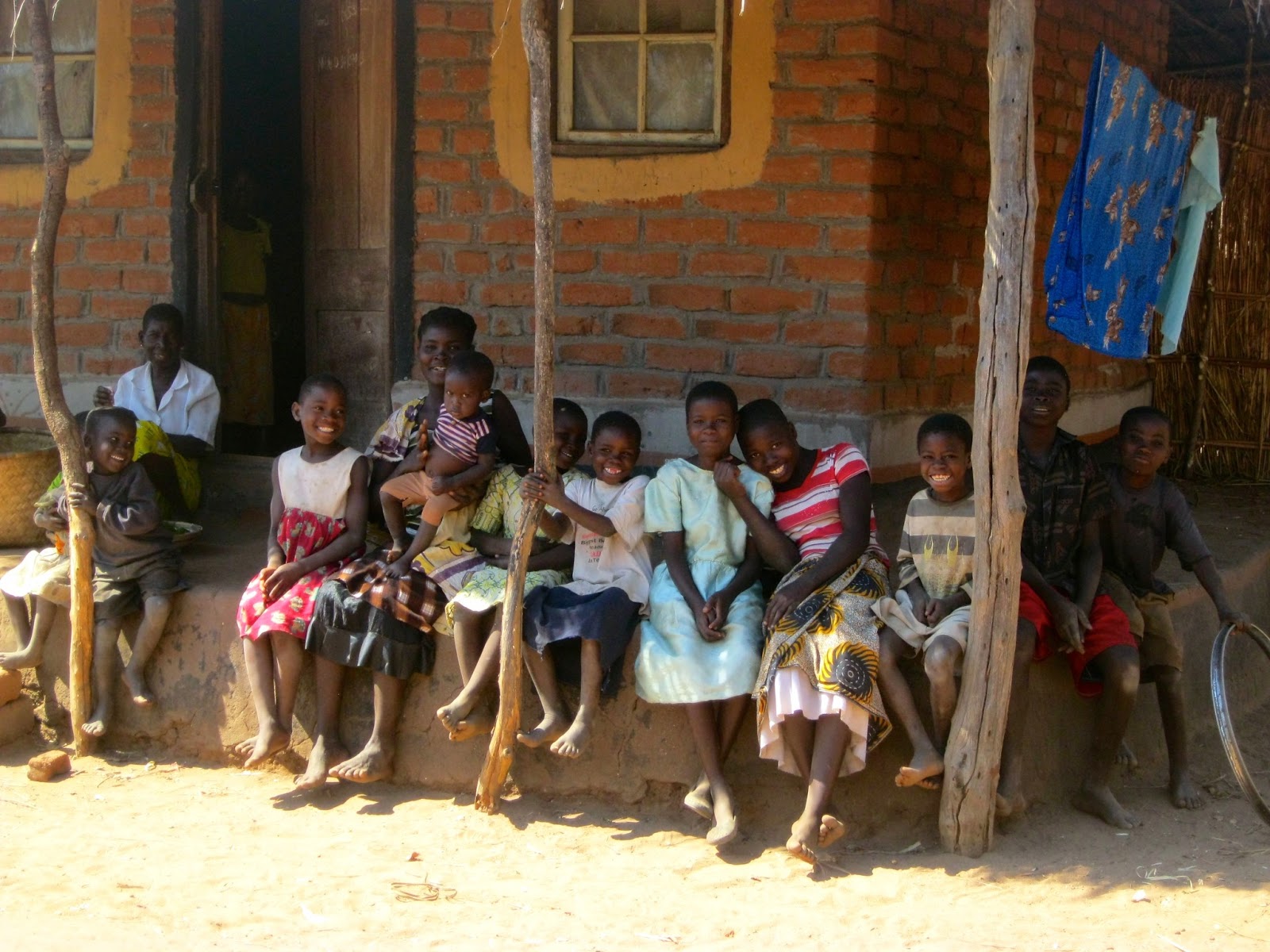
I waited patiently for the mission to arrive with the guest of honor, the Special Rapporteur. But there’s laughter coming from around me and I hear the whispers of little kids in Chichewa. They creep towards me and I smile at them. They smile shyly back and then run for cover on the dusty stoop of the brick house where they huddle together and look at me. I approach them cautiously, lest one of them is scared of the strange muzunguin their small community. They break into increasingly hysterical giggling the closer I get. I take my camera out and they squirm excitedly. I ask one of the case workers with me to ask if it would be alright for me to take their picture. It is. I take a shot and then turn the camera around for them to see. They all quickly surround me and start laughing and pointing at themselves on my small screen. I smile back. They position themselves for another picture and wait. I oblige, take a picture and again show them. The laughter this time is even louder, the pointing even more enthusiastic. We repeat this ritual a few times before I put my camera away and approach them.


I’m here to write a human interest piece for UNICEF about the Social Cash Transfer Program that UNICEF supports. Hoping to begin writing already, I approach the oldest in the group. A girl who looks about my age sits in the corner with a young child who appears to be around one year old in her lap. She looks away as I begin to speak and the case worker translates for me. I ask her first how old she is and she turns her attention away from the child and towards my direction. “Twenty-four,” she responds in English. I tell her I’m twenty-two and she beams at me. The child in her lap is her child she continues in Chichewa. I smile down at the baby who looks up at me suspiciously. The little boy is the youngest of her four children. She was fourteen when she got married and gave birth to the first. She asks me where my children are and I manage one last smile before the car arrives with our guests and the official visit begins.


As we drive away from the village and towards our next visit, I take in my surroundings. This trip has been my first excursion out of Lilongwe since I arrived in Malawi (save for a quick visit to a hotel by Lake Malawi the weekend prior). Along the roads that connect villages and small towns, you see people walking to their destinations or sometimes on rusty old bikes. They stop and move off the road as we speed by on paved road. Kids wave and chase after the car on dust roads where we have to slow down because of the potholes. Some people walk carrying large heavy loads of maize or fire wood. Others are empty handed. Their journeys on foot will be slow and arduous but they have to make it before it gets dark outside, which is around 5:30, because otherwise the road becomes dangerous as the cars can’t see the pedestrians. So they walk with a purpose towards their destination. Women have their skirts wrapped around their waists and tattered shirts on their torsos. Girlswear faded dresses covered in a thin layer of dust. Boys sport worn out shorts and ripped up tops. The older men and most younger men wear ragged long sleeves or donated t-shirts and trousers. Some are in their one suit. The men, by and large, wear shoes. Plastic, cheap and worn out, they are still better off than the women and children who are, with a few exceptions, barefoot.


In the towns, women sit in the shade and look up wearily at us as we pass through. They are hard at work on their household tasks or farming their small vegetable gardens. The young children are playing games with improvised toys, soccer balls made of paper and jump ropes constructed from pieces of small string tied together. They drop their games and wave at me as we pass, grinning. I wave back. The older children and men seem to be missing from the village scene.


In city centers, the roads are lined with merchants often accompanied by their small children, who are selling pots and pans, plastic bags, used shoes, maize, soya or other foods, and second hand or cheap imported clothes. They lay it out on the ground and sit and wait for someone to stop by their area and examine their wares. The cars that slow down are quickly surrounded by ambitious sellers carrying trays with tomatoes, oranges, strawberries, potatoes, apples, donuts or some kind of strange black fried food that I would like to believe originated from an animal. They display their goods to the passengers, hoping that someone bites and they can earn some money for the day. These merchants seem largely consist of the older children missing from the village. The tomatoes look good and the donuts smell amazing but we have to keep driving onwards.


Each scene has one striking similarity: the plethora of young children and teenagers. And in a country where about half the population is under the age of 18, this is no surprise. It is a young country in that sense. At each and every meeting we attend, sitting somewhere nearby is inevitably a group of children glancing at us and giggling. Schools are out so those who belong in primary school are home during the day now and play in the sun with their friends. Some of the older kids, many of whom can’t attend secondary school as it isn’t free, form a perimeter around the adults. Those with families already, join the adults in the group, though they rarely speak unless specifically asked to.


Such a young population offers a country a number of positives and negatives. On one hand, it is a large energetic group either on the precipice of entering the work force or already part of it. On the other, it’s a huge burden on the state and on the community to have so many dependents. What makes the scene considerably less optimistic, though, is the condition of this generation of kids. With stunting at nearly 50% among children, you have a group in which half will suffer from physical and cognitive underdevelopment. With the education system struggling to handle the massive student body, you are faced with a generation likely be systematically undereducated.


And you’ll have a generation of girls, like my friend in the beginning of the story, who will find themselves marrying and having children at an alarming young age. What is a young girl to do if she finds herself in this inimical context? She finds a husband and gets married. And with the poor sexual education available in Malawi, she will also likely very quickly find herself, still a child, a mother to her own child.


I’m trying, and likely failing, to address two huge issues on the national agenda: a young population and early marriage and childbirth. I chose to tackle them together because, to me, they are mutually reinforcing. A young uneducated and underdeveloped population has few opportunities and few alternatives. This problem is exacerbated for a young girl. She weds and gives birth to a child at a young age. This child will grow up in an environment that is not salubrious to healthy and complete development. If this child is a girl, she will one day grow up and face the same situation her mother was in and, if there isn’t an intervention in the cycle, will repeat her mother’s actions. As the number of young children being born to adolescents swells, the ability of the state and development partners to provide even ancillary services weakens and the problem is perpetuated.


I don’t want to sound as though I’m averring that a young parent cannot be a good parent. However, a parent who lacks a basic education, a stable job, proper rights, food security and other fundamentals is unlikely to be able to raise a child properly. Old or young, this remains the case. However the chances of this dismal situation being reality is more likely if the parents are young and have not established themselves before they have another mouth to feed, much less four mouths to feed.


I asked her if she was receiving aid from the government such as a cash transfer. No, she says, because her husband can work. But can he work to fill six mouths and provide an education for five? It seems an impossible and almost hopeless task but it is reality here.


For more information on Malawi's young population and what is being done to mitigate the bad and promote the good, check out UNICEF Malawi online or on Facebook.

For more information about the Right to Food, check out the Special Rapporteur's website. For information on his work in Malawi, check out his recent press release and look for his entire report, coming out in May, 2014.

For any other information related to this piece, feel free to leave a comment or to contact me via email, via twitter or any other imaginative way you can think of!

Friday, July 19, 2013

The Right to Food: A Field Visit


The Right to Food: A Field Visit

July, 2013; Malawi
 

Following the field visit around was not how I had originally planned to spend one of my weekends in Malawi. But based on the itinerary, it promised to be exciting and it would allow me to see much more of the country that I had been exposed to at that point. I firmly believe that only seeing the capital city is a way to lull oneself into a false feeling of what the country holds, even one with problems that don’t feel to be as recondite as Malawi’s, as I would discover in those three days.


The Special Rapporteur on the Right to Food was in Malawi looking into issues of food security. There was a time when Malawi was considered to be food secure and was even producing a surplus. But suddenly there was a recrudescence of hunger and starvation. His job was to look into how the situation was doing now as well as to make recommendations to the government on how to improve food security. To be clear, food security does not simply mean access to sufficient caloric intake but also access to nutrients and equity.


The Special Rapporteur and his team impressed me immensely. They were well researched going in,
they spoke with confidence but without arrogance and they listened attentively. They sought to meet to as many different groups of people as possible and to understand from different angles the problem of food security in Malawi. They were not expecting to be cosseted on their trip and braved bad roads and local foods. And I learned immense amounts from accompanying them.


From the many things I picked up from the many places we visited, a few things struck me as particularly noteworthy. The first was the constant threat of encroachment felt by many Malawians against the land on which they lived. This threat, the threat of land grabs, is becoming a problem across Africa and elsewhere. The second was the penumbra of worse times ahead once the Fertilizer Input Subsidy Program, FISP, is phased out. FISP, a program marred by rampant corruption and failures, was nonetheless pivotal in bringing the under-five mortality rate in Malawi down. The inevitable end to the program is essentially a threat to the success that Malawi has made in reducing malnutrition and starvation. What will happen to the people who depend on the program for precious fertilizer to use to grow maize, the staple in Malawi, is an alarming dilemma. The third was the mistreatment of tenant and casual workers on estates in Malawi. I was aware of mistreatment on tea and sugar estates, which are found throughout the country, but blissfully unaware of the similar and worse treatment of tobacco farmers in Malawi. The consumption of tobacco is not only harmful to my own health but also to the wellbeing of others whose day to day lives and struggles I was introduced to. Fair Trade certification for tobacco will never happen but how can a socially conscientious tobacco consumer now enjoy her cigarette? Finally, I become acutely aware of exactly how young the population of Malawi is. I knew that the figures indicate that about 50% is under the age of 18 but to actually drive along the roads and through towns and villages and see the abundance of youth and children brings meaning to that statistic. I often find that most statistics are useless at best and rebarbative at worst because they don’t induce real understanding. They create a overly simplified picture of a country that makes it easy to overlook the real world implications of these numbers.


Each of these four topics will be featured in their own entries because I think they all are worth expanding on. Only taken individually and at greater length can you begin to grasp my field visit. Taken together with other vignettes, you might garner an understanding of my outlook on Malawi.